 Türkçe
 Deutsch
 Русский
 Polski
 Français
 Español
 العربية
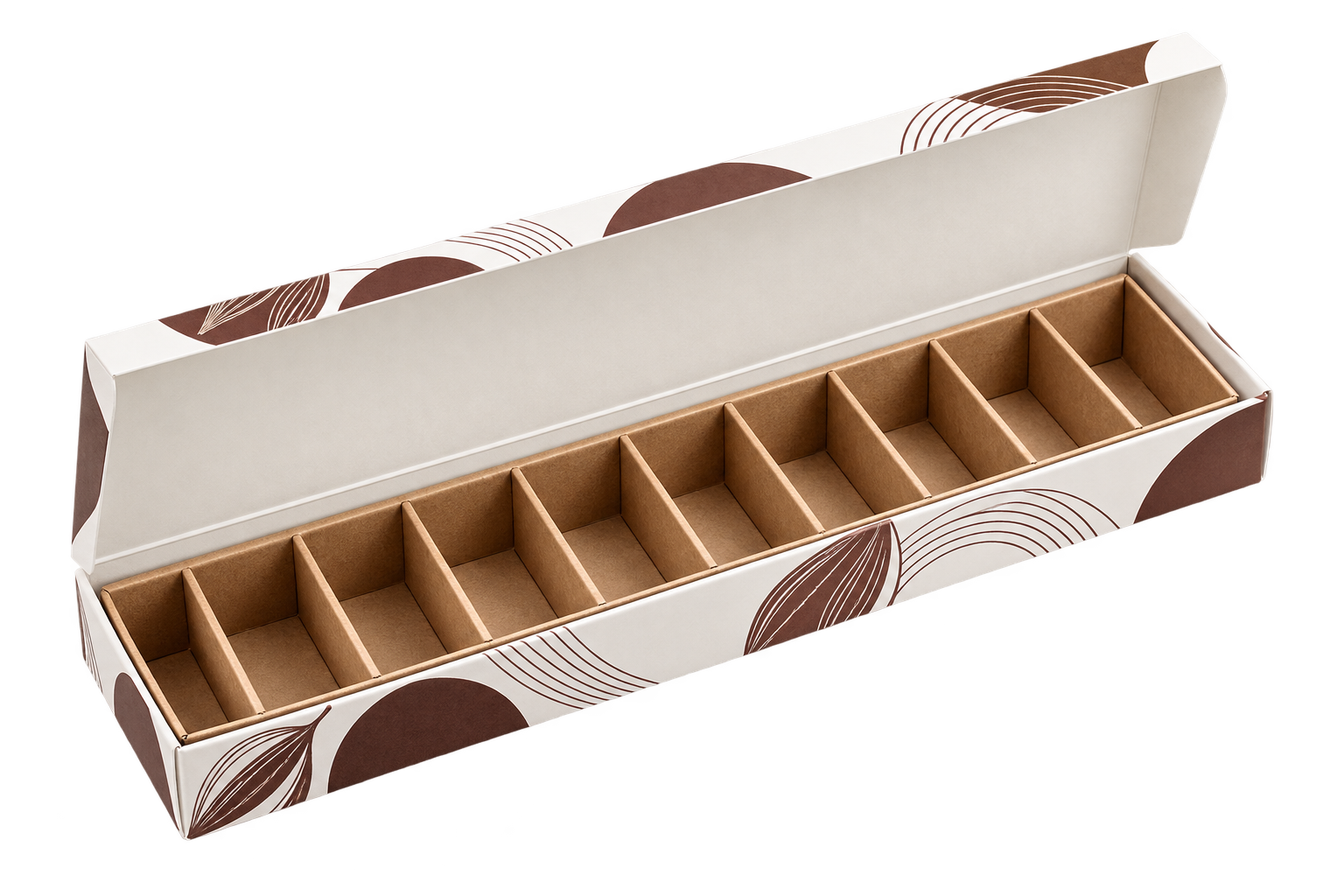
Why direct food contact requires a separate specification
Sadri Global can manufacture packaging intended for direct contact with food, but suitability is never treated as a blanket statement for every printed box or paper. A food-contact project is assessed as a complete construction and for its exact conditions of use.
Under the European food-contact framework, materials must not transfer constituents to food at levels that could endanger health, unacceptably change the food's composition or impair taste and odour. Good manufacturing practice and traceability are therefore part of the technical brief, not an afterthought.
What we define before production
The same material can perform differently with dry, fatty, acidic, moist, hot or frozen food. Contact time, storage, reheating, filling temperature and whether a functional barrier is present can all change the correct solution.
- Food type and whether contact is direct or behind a functional barrier
- Expected contact time, filling temperature, storage and transport conditions
- Paper or board, recycled-content restrictions and the food-contact side of the structure
- Low-migration ink, coating, varnish, adhesive and lamination requirements where applicable
- Cut edges, windows, seams, glue areas and the risk of set-off from printed surfaces
- Required supplier declarations, migration or organoleptic testing and customer documentation
Controlled production and FSSC 22000
Our food-packaging workflow uses controlled specifications, approved materials, hygiene rules, traceability, change control and documented release checks. FSSC 22000 provides a structured food-safety-management framework for packaging manufacturing, including hazard analysis and sector-specific prerequisite programmes.
Certification alone does not make every possible package suitable for every food. The current certificate scope, material declarations and any test evidence required for the exact project are confirmed during quotation and technical approval.
Print quality without compromising suitability
Food-contact work can still deliver strong shelf impact. Colour-managed printing, embossing, foil, varnish and structural design can be used when their location and material system are appropriate. Decorative layers are kept outside the food-contact zone unless the complete system is specifically supported for the intended use.
Before mass production, we align the dieline, material specification, print and converting route, declarations, approval sample and release criteria. This gives the customer one traceable technical record from artwork to delivery.